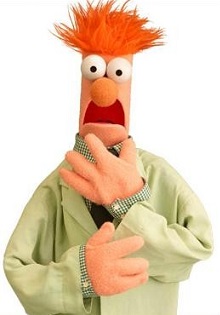
Beaker's True Show: Unraveling the Muppet Mystery and His Iconic Home
For decades, the vibrant world of the Muppets has captivated audiences of all ages, creating a rich tapestry of beloved characters. Among them, one particular Muppet stands out for his endearing vulnerability, high-pitched "Mee-mee-mee-mee!" vocalizations, and often explosive misfortunes: Beaker. With his distinctive green hair, wide eyes, and perpetually nervous demeanor, Beaker has become a pop culture icon. Yet, a persistent question frequently arises in conversations about this beloved character:
Is Beaker A Sesame Street Character? It's a common misconception, understandable given the shared creative genius of Jim Henson, but one that deserves a definitive answer. Let's pull back the curtain and reveal Beaker's true theatrical home.
The simple, clear answer to this widely asked question is no, Beaker is not a primary or regular character on
Sesame Street. While he certainly shares the same "Muppet" family lineage, his fame and extensive appearances stem almost exclusively from a different, equally iconic production: *The Muppet Show*. Understanding this distinction is key to appreciating the unique universes Jim Henson and his team meticulously crafted.
Unraveling the Muppet Mystery: Beaker's True Origins on *The Muppet Show*
Beaker made his grand debut not on the sunny stoops of Sesame Street, but in the laboratory segments of *The Muppet Show*. First appearing in 1977 during the show's second season, Beaker quickly became an indispensable, if perpetually terrified, assistant to the brilliant but often reckless Dr. Bunsen Honeydew. Their segment, "Muppet Labs," was a recurring sketch renowned for its comically disastrous scientific experiments, which almost invariably ended with Beaker being subjected to some form of painful, shocking, or utterly bizarre fate. From being disintegrated and reassembled, to turning into a giant monster, or simply catching fire, Beaker's reactions – a symphony of high-pitched squeaks and frantic gestures – were always the highlight.
His role was brilliant in its simplicity: he was the ultimate straight man (or rather, straight Muppet) to Dr. Honeydew's oblivious scientific pursuits. Beaker's vulnerability made him instantly relatable, and his plight often served as the comedic punchline. It was on this grand variety stage that Beaker truly blossomed into the character we know and love, cementing his place in the hearts of millions around the globe. His signature "Mee-mee-mee" became an unmistakable vocal trademark, conveying a range of emotions from terror and confusion to exasperation and even occasional triumph.
The creative team behind *The Muppet Show*, led by Jim Henson, Frank Oz, and Jerry Nelson (Beaker's original performer), crafted Beaker with a specific comedic purpose in mind. He wasn't designed for educational segments or to teach children about numbers and letters; he was there for pure, unadulterated slapstick comedy and to elicit empathetic laughter from a broad, family audience. This fundamental difference in character design and purpose is a primary reason why he isn't found among the residents of Sesame Street.
A Tale of Two Shows: The Distinct Universes of The Muppets and Sesame Street
To fully grasp why Beaker isn't a *Sesame Street* character, it's essential to understand the distinct philosophies and target audiences behind *The Muppet Show* and *Sesame Street*. Both shows sprang from the brilliant mind of Jim Henson, often leading to confusion about character origins, but they were conceived with very different goals.
* ***Sesame Street* (Debuted 1969):** This groundbreaking children's television series was created by Joan Ganz Cooney and Lloyd Morrisett of the Children's Television Workshop (now Sesame Workshop), with Jim Henson providing the Muppets. Its primary mission was, and remains, educational. It aimed to prepare young children for school by teaching literacy, numeracy, social skills, and emotional development, particularly for underprivileged children. Characters like Big Bird, Elmo, Oscar the Grouch, Cookie Monster, Bert, and Ernie were meticulously designed to embody specific educational concepts or personality traits that children could learn from or relate to. The show's format is typically episodic, focusing on lessons reinforced through songs, skits, and interaction with human characters.
* ***The Muppet Show* (Debuted 1976):** Conceived by Jim Henson himself, *The Muppet Show* was a variety-style entertainment program intended for a broad family audience, not exclusively children. It featured Kermit the Frog as the host, trying to keep a chaotic backstage environment and a motley crew of performers (including Miss Piggy, Fozzie Bear, Gonzo, Animal, and, of course, Dr. Honeydew and Beaker) in line for a weekly show. Its goal was pure entertainment, showcasing Henson's extraordinary puppetry skills and unique brand of humor, which often included celebrity guest stars, musical numbers, and sketch comedy. The humor frequently had a sophisticated, often self-referential edge that appealed to adults as much as children.
While both shows shared the innovative puppetry and creative genius of Jim Henson, their distinct purposes led to the creation of separate, though occasionally overlapping, character rosters. The Muppets of *Sesame Street* are generally more grounded in reality (even if they are a giant bird or a cookie addict) and focused on teaching. *The Muppet Show*'s characters, like Beaker, are often more exaggerated, whimsical, and geared towards classic comedic archetypes.
Beaker's Enduring Appeal and Crossover Appearances: A Wider Muppet Family
While Beaker's home base is unequivocally *The Muppet Show* and its subsequent feature films and spin-offs, it’s worth noting that the "Muppet family" is indeed vast and interconnected. This shared lineage and the occasional special event can contribute to the persistent question,
Is Beaker a Sesame Street Character? Unraveling the Muppet Mystery is a common pursuit for fans.
Beaker's enduring appeal lies in his universal relatability. Who hasn't felt overwhelmed, nervous, or like they're about to explode from stress? His exaggerated expressions and reactions tap into a deeply human experience, making him a comedic genius even without uttering a single intelligible word. This charisma has allowed him to transcend his original context and appear in various other Muppet productions, including:
* ***Muppet Babies*:** Beaker was a recurring character in the animated *Muppet Babies* series (both the original and the reboot), showing a younger version of himself alongside other Muppet Show characters.
* ***Muppet Movies*:** He has featured prominently in almost all of the major Muppet feature films, from *The Muppet Movie* to *Muppets Most Wanted*, often continuing his role as Dr. Honeydew's assistant.
* ***Muppet Specials & Guest Appearances*:** Like many popular Muppets, Beaker has made occasional guest appearances in other media, sometimes even in promotional material that might indirectly involve *Sesame Street* characters, though rarely on the show itself as a fully integrated character. For instance, in some charity telethons or major Muppet-ensemble events, both sets of characters might share the screen, but this doesn't make Beaker a *Sesame Street* regular.
These broader appearances reinforce the idea that all these characters belong to the larger "Muppet" brand, which Jim Henson created. However, they do not change the fact that Beaker’s creative home and consistent narrative arc exist squarely within *The Muppet Show* universe.
Why the Confusion Lingers: A Shared Legacy of Genius
The question,
The Beaker Debate: Exploring His Connection to Sesame Street, isn't born out of ignorance but rather out of a valid point of confusion for many. There are several reasons why this misconception persists:
1.
Shared Creator: Jim Henson: Both *Sesame Street* and *The Muppet Show* (and all subsequent Muppet projects) were conceived and developed under the creative guidance of the legendary Jim Henson. His distinct style of puppetry, humor, and character development is evident in both.
2.
The Term "Muppet": "Muppet" is a proprietary term coined by Henson himself, a portmanteau of "marionette" and "puppet." All characters from both *Sesame Street* and *The Muppet Show* are Muppets, leading to a natural assumption of shared universes.
3.
Cultural Omnipresence: Both shows achieved immense global popularity and cultural impact. For many, childhood memories are a delightful blur of colorful, talking puppets, and distinguishing between their precise origins can be challenging years later.
4.
Similar Visual Style: The physical design and fabrication techniques for puppets across both shows shared a consistent aesthetic, further blurring the lines for casual viewers.
These factors combined create a compelling, albeit incorrect, narrative that Beaker might be a *Sesame Street* resident. However, a deeper dive into their respective histories clearly delineates their separate, yet equally celebrated, paths.
Conclusion: Beaker's Undisputed Place in Muppet History
So, the next time the question of Beaker's affiliation arises, you can confidently state: while he is an iconic Muppet created by Jim Henson,
Beaker is not a Sesame Street character. His true home is within the chaotic, star-studded, and brilliantly comedic world of *The Muppet Show*, where he served as the lovable, screaming, and often exploding assistant to Dr. Bunsen Honeydew. His universal appeal, masterful puppetry, and unique vocalizations have earned him a permanent place in popular culture, entirely on the merits of his appearances on a show celebrated for its pure entertainment value. Beaker stands as a testament to the diverse and expansive genius of Jim Henson's Muppet universe, a universe rich enough to contain both educational street-dwellers and calamitous lab assistants, each shining brightly in their own distinct galaxy.